
How Much General Liability Insurance Does a Florida Business Need?
Most Florida business owners buy general liability insurance because somebody told them to, not because the state did. It covers third-party claims: a customer gets hurt, your crew damages somebody’s property, or you get accused of libel, slander or copying a competitor’s ad.
So how much do you need? Enough to satisfy the strictest piece of paper you have to sign. For most Florida businesses that is not a state minimum at all. It is the insurance requirements clause in a subcontract, a commercial lease, or a vendor packet, and those numbers run well above anything the state asks for.
Questions first? Call us at (786) 332-5602.
Which claims does a general liability policy pay?
A commercial general liability policy protects your business from financial loss when you are liable for bodily injury, property damage, or personal and advertising injury caused by your services, your business operations or your employees. It pays what you are legally found to owe, up to your policy limits. The Insurance Information Institute describes it in roughly those terms.
In plain language, it handles the harm your business does to other people and their stuff. The customer who slips in your lobby. The pipe your plumber cracks in somebody’s wall. It also pays your legal defense, because a claim that goes nowhere still costs money to make go away.
Is general liability insurance required in Florida?
No Florida law requires a business in general to carry general liability insurance. True, and not much help to you. So where does the pressure actually come from?
Contractor licensing. Florida Statute 489.115(5)(a) requires a contractor applying for a certificate or registration to submit an affidavit on a board form. It attests that they have obtained workers’ compensation insurance as required by chapter 440, public liability insurance, and property damage insurance for the safety and welfare of the public, in amounts determined by rule of the board. It applies at renewal too, so this comes back every cycle, not just once at the start.
Your county. A Miami-Dade trade license brings its own requirement. More on that below.
Everybody you do business with. General contractors, landlords, property managers, HOAs and corporate clients all write their own insurance requirements, and nothing obliges them to be reasonable about it.
So who needs it? That third category is why such different businesses end up buying the same policy: trades and subcontractors, retail and restaurant tenants, salons, clinics, cleaning and landscaping crews, event vendors, and anyone working inside a building somebody else owns.
How much does general liability cost a Florida business?
There is no single number, and we are deliberately not printing an average. No Florida state agency publishes one, the figures on comparison sites disagree with each other, and none of them knows your classification code or claims history.
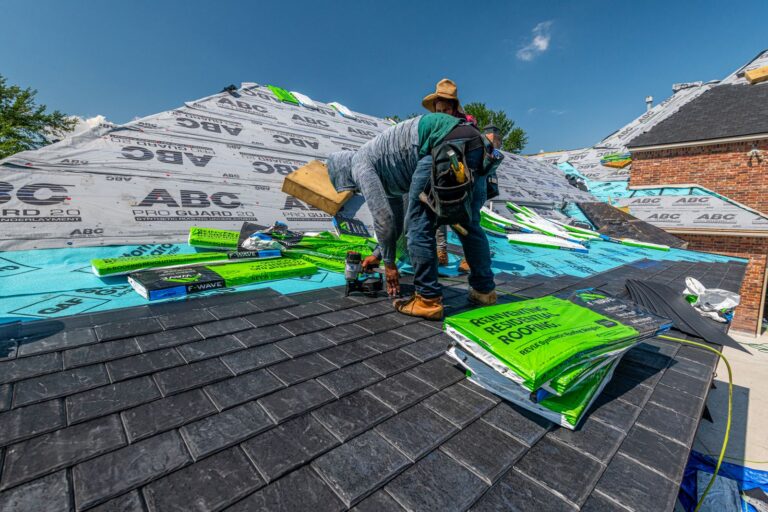
The useful part is why the spread is so wide. A software consultant’s worst day is a disagreement over an invoice. A roofing crew works at height, over somebody else’s house, and leaves behind finished work that can fail years later and still trace back to that policy.
Cost varies by business type first and size second. The factors that affect what you pay:
- Business type, down to the classification code the carrier assigns your work
- Size, measured as payroll or annual receipts rather than headcount alone
- The limit you buy, which is the part your contract may be deciding for you
- Your claims history
- Whether your coverage sits with an admitted carrier or in the surplus lines market, where harder Florida risks tend to land
Notice what is missing from that list: the cheapest policy. A policy whose limit falls below what your contract demands has one real problem. You cannot sign the contract.
How much coverage does a Florida contractor license require?
If you are licensed through the state, the amounts come from Florida Administrative Code Rule 61G4-15.003 and depend on your category.
| License category | Public liability | Property damage |
|---|---|---|
| General and Building contractors | $300,000 | $50,000 |
| Residential, Roofing, Plumbing, Mechanical, Air Conditioning, Sheet Metal, Pool, Solar, Underground Utility and Excavation, Pollutant Storage specialty | $100,000 | $25,000 |
Two things about that rule get missed constantly.
First, it is a continuing obligation. The rule requires licensees to continually maintain the coverage, so a lapse partway through your license term is a violation of the rule itself, on top of leaving you uninsured.
Second, the state wants its paperwork a specific way. The certificate holder has to be the State of Florida, Department of Business and Professional Regulation, Construction Industry Licensing Board, and you have thirty days to produce a certificate when the Board asks.
Why does your contract ask for more than the state minimum?
Because the two numbers do different jobs. A license minimum exists so the state is comfortable letting you work at all. A general contractor’s clause exists to protect the general contractor if you cause a loss on their project, and nobody promised those would line up.
A clause usually gives you two numbers. Per the Insurance Information Institute, a per-occurrence limit is the most the insurer will pay for all damages arising out of any one occurrence. The aggregate caps the whole policy year, split into a products-completed operations aggregate for work you finished and a general aggregate for everything else.
Picture a clause that asks for one million per occurrence and two million aggregate. It is asking for both. A policy that clears the first number and not the second does not satisfy the clause, and whoever reviews your certificate will catch it.
What if a general contractor demands a limit you do not carry?
You do not have to turn the job down, and you should not sign it and sort it out afterward. Send the clause to your agent before the signature.
Sometimes the fix is a higher primary limit. Sometimes it’s an excess or umbrella layer stacked on the policy you already have. And sometimes the clause isn’t asking for more coverage at all: it wants you added as an additional insured, or a waiver of subrogation, or primary and non-contributory wording, which are endorsements. Reading “name me on your policy” as “I need a bigger limit” is one of the most expensive misreadings in this process.
That reading is the part we do here. Send us the subcontract language or the lease exhibit and we will tell you whether your policy satisfies it and what is missing, before you commit to anything.
You can also reach us at (786) 332-5602.
How does a certificate of insurance actually work?
A certificate of insurance is a one-page snapshot showing that a policy exists, with certain limits, as of a certain date. It is evidence of coverage. It is not the coverage, and it does not change the coverage.
Who issues it. Your agent or your carrier, nobody else. You request it, you don’t produce it, and it normally takes very little time.
Certificate holder is not the same as additional insured. Certificate holder means somebody gets a copy of the document. Additional insured means the policy’s protection has been extended to that party by endorsement. Sending a certificate when the clause wanted an endorsement is a common reason one gets bounced back.
Never edit one. Not even to make it say what you are certain the policy covers. Florida’s Unfair Insurance Trade Practices Act, at Statute 626.9541(1)(a), lists a property and casualty certificate of insurance altered after being issued among the statements it is a prohibited practice to knowingly make, issue or circulate. If a certificate is wrong, ask whoever issued it for a corrected one.
What general liability insurance does not cover
Four gaps do most of the damage, and the first is the expensive one.
Your own employees. An employee hurt on the job is a workers’ compensation claim, not a general liability claim. Per the Florida Division of Workers’ Compensation, a construction employer with one or more employees, including themselves, is required to carry coverage, while outside construction the threshold is four or more, full-time or part-time. An exempted corporate officer or LLC member does not count as an employee toward either total, which we covered in who qualifies for a Florida workers’ comp exemption.
Vehicles. Your work truck is commercial auto, and a personal auto policy will not quietly cover it.
Your own property. Your building, inventory and equipment are commercial property coverage. General liability pays for other people’s property, not yours.
Professional mistakes. Bad advice, a design error or a missed deadline is professional liability territory.
Bonding is a different product from insurance too. We write surety bonds as well, so ask if a job brings that up.
What this looks like for a Miami-Dade business
If your license came from the county instead of the state, there is an extra layer. The Miami-Dade Construction Trades Qualifying Board oversees county construction trade licenses under Chapter 10 of the county code, and proof of liability insurance and workers’ compensation insurance is required after Board approval.
So a working Miami-Dade trade contractor is often satisfying three audiences at once: a licensing board that wants coverage maintained, a general contractor who wants a specific limit and an additional insured endorsement, and a building owner who wants their own certificate. Three certificates, one policy underneath. The limit you pick either clears all three or stalls a job.
Figure out your limit before you need it
So bring us the paperwork: the subcontract clause, the lease exhibit, or just your license category if that is where you are starting. We are an insurance agency in Miami with a commercial focus, and we will read what you are being asked for against what you actually have.
Prefer the phone? Call (786) 332-5602. More on what we cover for Florida businesses is on our commercial insurance page.
Frequently asked questions
What is the difference between a claims-made and an occurrence policy?
An occurrence policy responds to incidents that happened during the policy period, whenever the claim gets filed. A claims-made policy responds to claims reported while the policy is active. Most general liability policies are written on an occurrence basis, which matters for finished work that causes a problem years later.
Does an umbrella policy count toward the limit my contract requires?
That depends entirely on how the clause is worded. Some clauses accept a combination of primary and excess coverage, others specify a primary limit. Check yours before you buy rather than after.